


“If bugs help our gardens, shouldn’t we build them a home?”
It was a simple question. One that could have been answered in a sentence. Instead, it became a journey that lasted months. At K’sirs, we believe the most meaningful lessons are not delivered in a single class period. They unfold gradually. They grow through observation, curiosity, trial, error, conversation, and reflection. Children don’t simply learn concepts, they live with them until those concepts become understanding. Our Grade 4 Bug Hotel project is one such story.
Learning Doesn’t Happen Overnight
The Bug Hotel was never the objective. It was the outcome. For nearly four months, our Grade 4 students immersed themselves in understanding one of the smallest yet most significant communities in our environment, the world of insects.
They observed insects around the campus. They watched where they lived. They discussed their behaviours. They learnt that the tiny creatures they often ignored were quietly performing some of nature’s most important jobs.
Not every bug is harmful. Many are essential. Some pollinate flowers. Some enrich the soil. Some naturally keep harmful pests away, protecting gardens without chemicals. With every new discovery, the students’ perspective began to change. The insects were no longer just “bugs.” They were partners in sustaining life.
Curiosity Changes the Questions
As the weeks passed, something remarkable happened. The questions changed. Initially, students wanted to know:
“What bug is this?”
“What does it eat?”
“Where does it live?”
Soon, those questions became deeper.
“Why does it choose that place?”
“Does every insect need the same kind of shelter?”
“What happens if they don’t have a safe place to live?”
Learning had quietly shifted from gathering information to developing empathy. And then came the question that changed the direction of the project entirely.
“If they do so much for our gardens… why don’t we build them a hotel?”
Moments later, another voice echoed through the classroom.
“If we’re making them a hotel… can we charge them rent?”
The room burst into laughter. Yet hidden within that innocent humour was genuine ownership. The children were no longer completing a school activity. They were solving a problem.
Designing for Nature
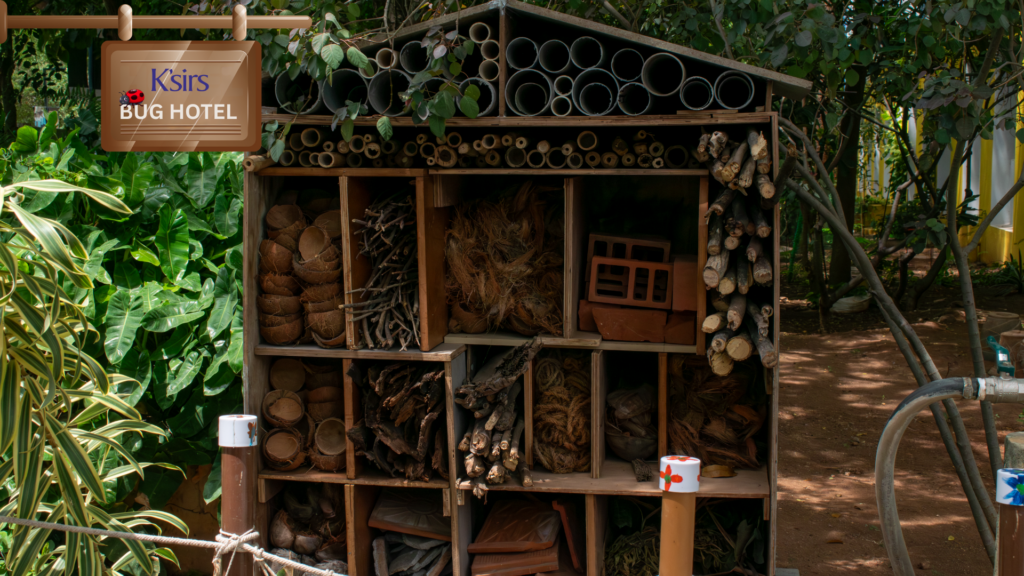
Building something for insects proved far more challenging than anyone imagined. Students quickly realised they couldn’t simply fill a box with sticks and call it a Bug Hotel. Different insects have different needs. Some prefer narrow tunnels. Others seek hollow stems. Some require larger spaces. Others need dry corners filled with bark, bamboo or coconut shells.
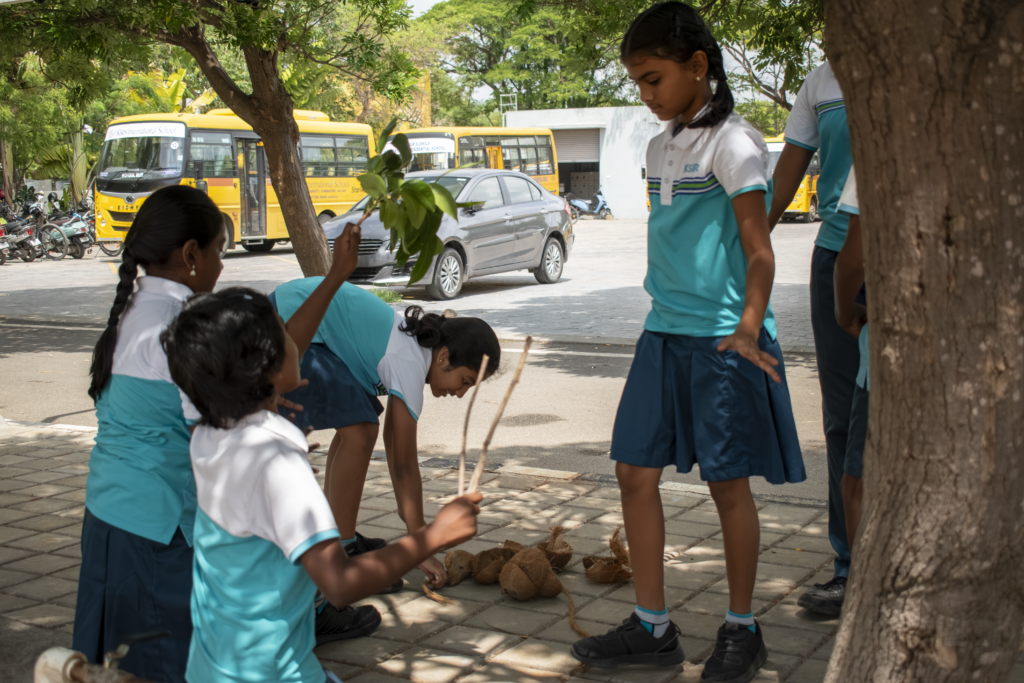
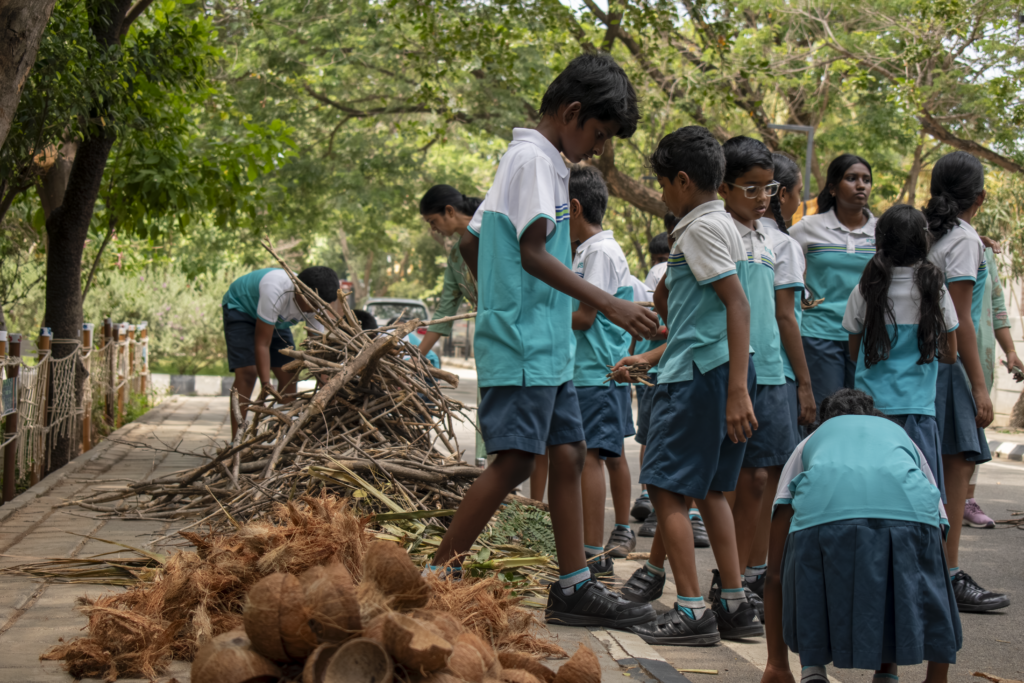
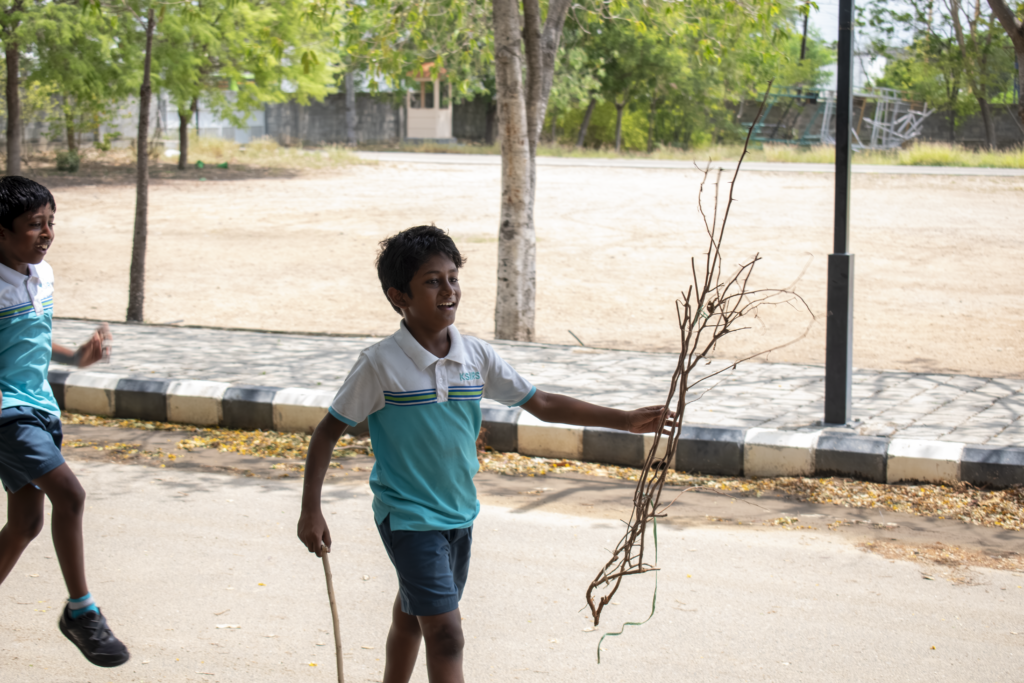
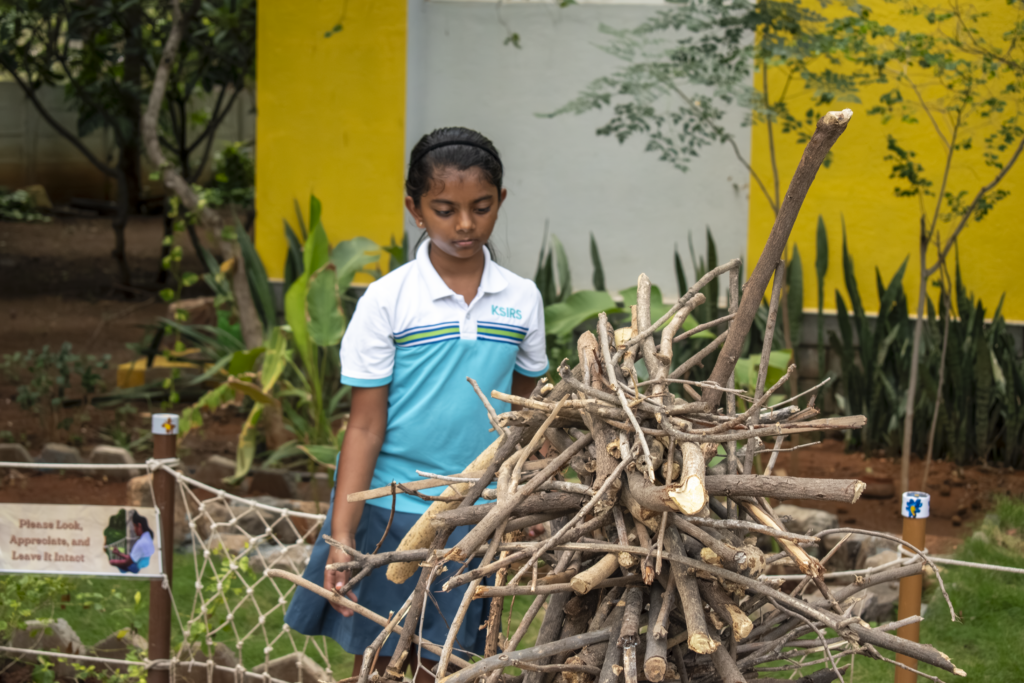
The students researched, debated and they redesigned again and again. Every new piece of information resulted in another modification. They learnt one of the most important principles of design:
Good design begins with understanding the needs of those who will use it.
A School Community Builds Together
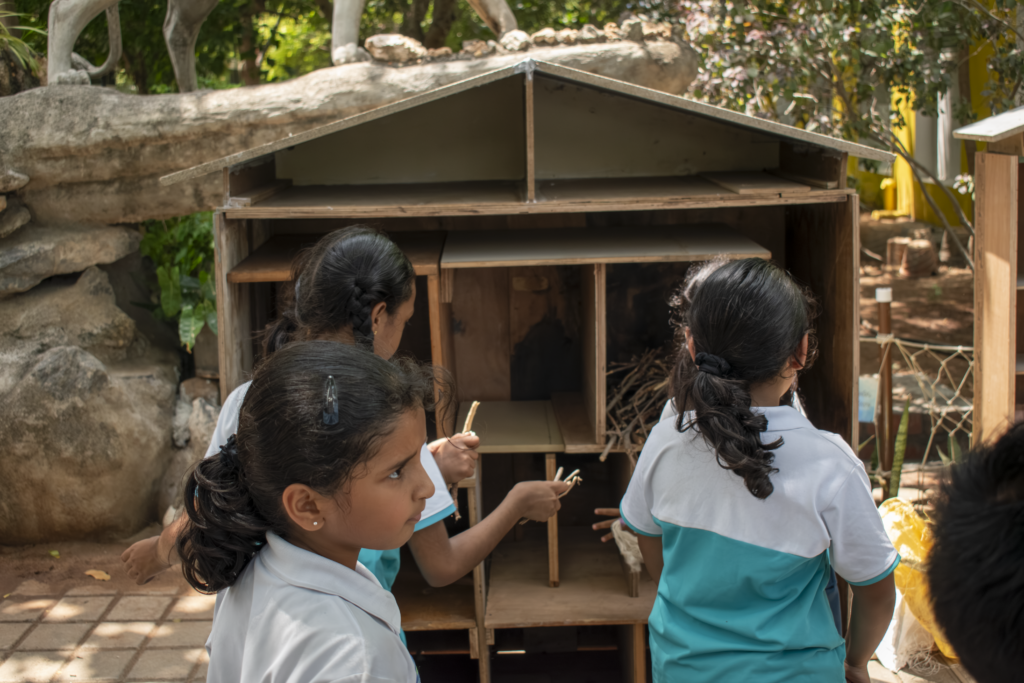
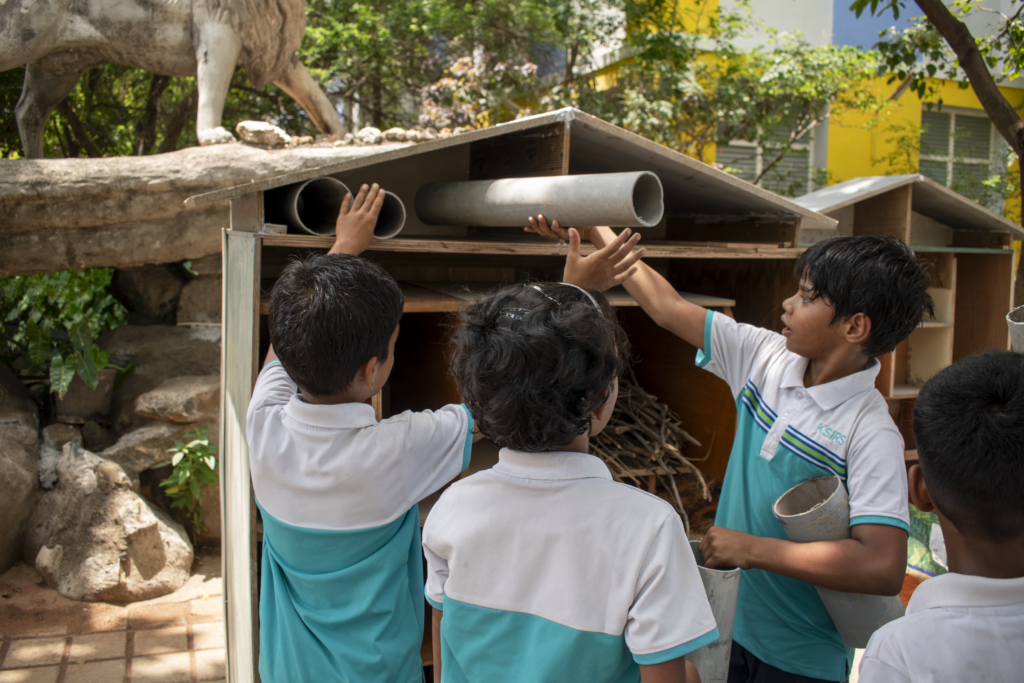
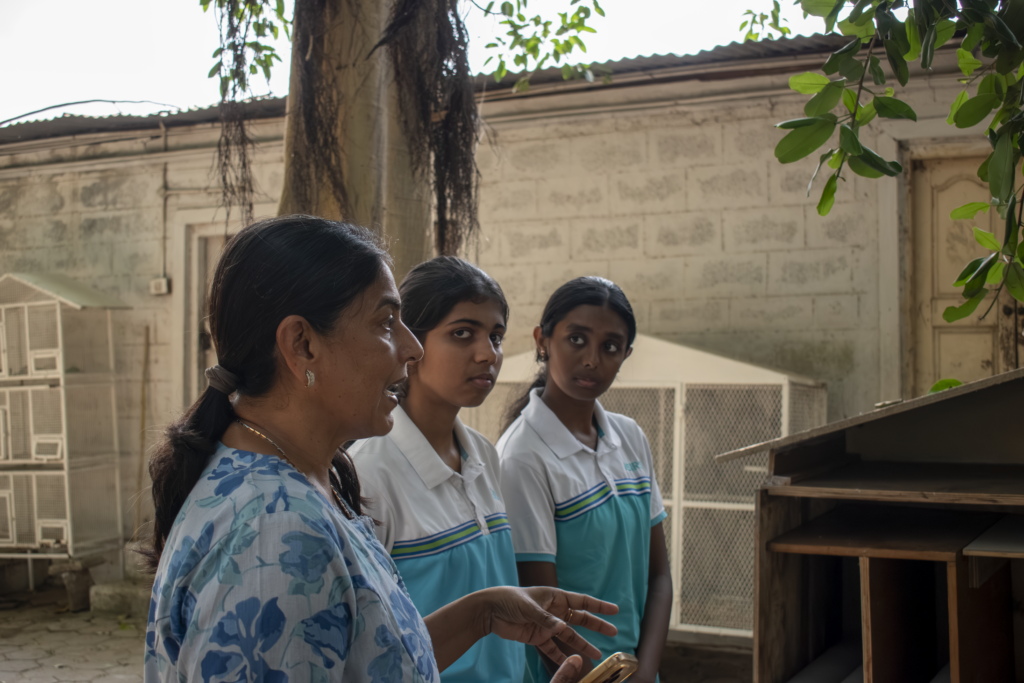
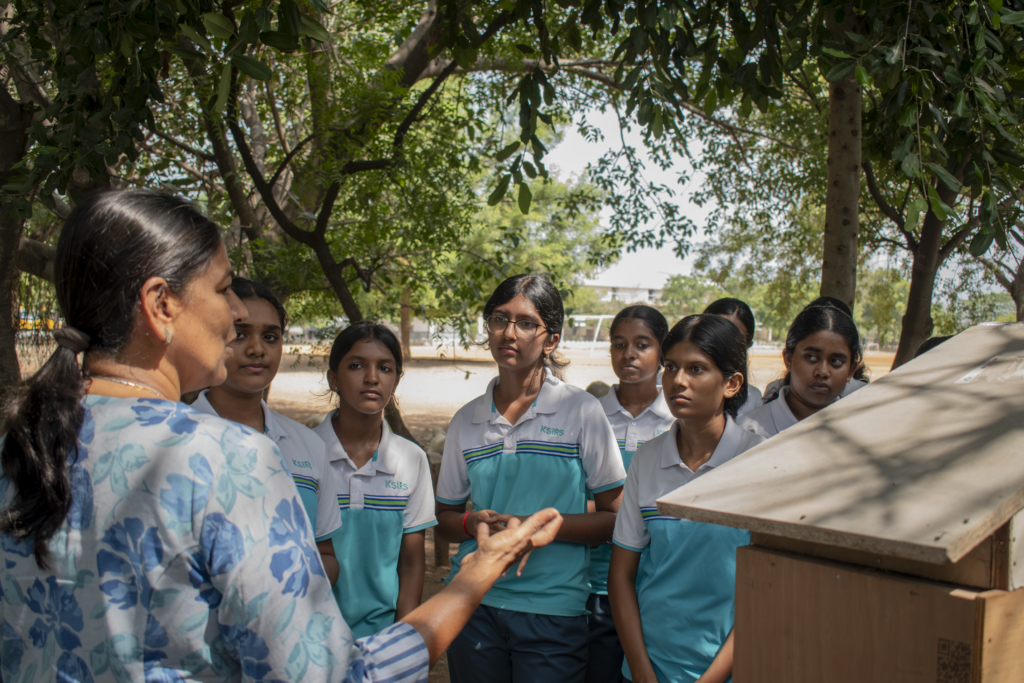
Once the design was finalised, the project became a community effort. Senior students stepped in to guide and support. Our carpenters transformed student sketches into a sturdy framework while ensuring every idea remained true to the children’s vision. The materials told their own story. Twigs collected from around the campus. Coconut shells brought from home. Bamboo, tree bark. husks, reclaimed pipes, wooden blocks and even old tiles were carefully drilled to create nesting spaces for solitary bees and other beneficial insects. Nothing was chosen randomly. Every material had a purpose, every compartment served a different resident. Piece by piece, the Bug Hotel began to take shape.
More Than a Structure
Standing before the completed Bug Hotel, it would be easy to admire the craftsmanship. But the real achievement wasn’t the structure, it was the transformation that happened within the children. They learnt that conservation isn’t only about planting trees. Sometimes it begins with creating a safe place for the smallest creatures that quietly sustain our ecosystems. They discovered that environmental responsibility grows from understanding, empathy extends beyond people and that even the smallest acts of care can make a meaningful difference.
Most importantly, they experienced something every child deserves to experience in school. The feeling that their learning had purpose. That what they studied could become something real, something useful and something that gives back to nature.
Education That Lives Beyond the Classroom
Projects like the Bug Hotel remind us that authentic education is rarely measured by worksheets completed or facts memorised. Its true measure lies elsewhere. In the questions children begin asking, in the responsibility they choose to take, in the problems they decide to solve and in the compassion they develop for a world they are only beginning to understand.
The Bug Hotel now stands quietly in our campus. A home for insects, a reminder of months of exploration and a symbol of what happens when curiosity is given time to grow.